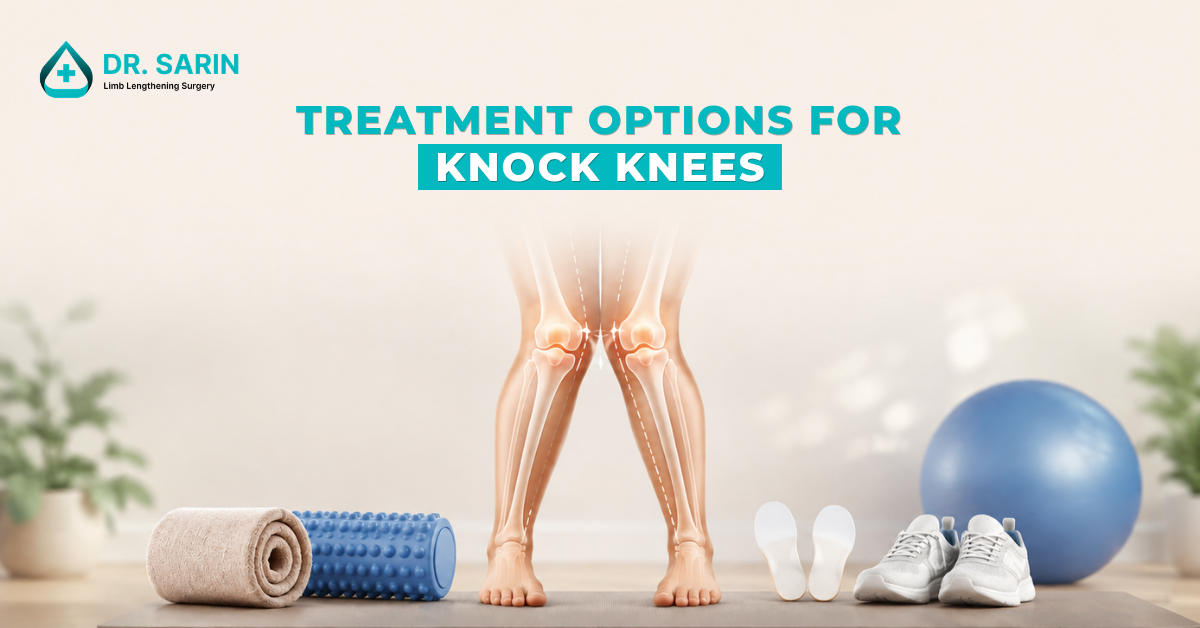
Knock knees, medically known as genu valgum, is a condition in which the knees angle inward while the ankles remain apart when standing. The condition can affect both children and adults and may vary from a mild alignment difference to a more noticeable deformity.
Once individuals understand what knock knees are and whether the condition applies to them, the next common question is about treatment. Many people want to know whether knock knees can be improved and what options are available to address the alignment.
The treatment approach depends on several factors, including age, the severity of the condition, the underlying cause, and the degree of lower limb alignment. Because every case is unique, treatment is often individualized to meet the specific needs of the patient.
Is Treatment Always Necessary?
Not every case of knock knees requires treatment.
In some children, genu valgum may be part of normal growth and development. As the bones continue to mature, the alignment of the legs may naturally improve over time.
Similarly, some adults have mild knock knees that do not significantly affect their appearance, mobility, or daily activities. In such situations, treatment may not always be necessary.
The decision to pursue treatment depends on the individual’s alignment, concerns, and overall orthopedic evaluation.
Understanding Treatment Goals
The primary goal of treatment is to improve lower limb alignment and support healthy function.
Treatment may aim to:
- Improve the alignment of the legs
- Promote balanced weight distribution
- Support comfortable movement
- Address concerns related to appearance
- Improve overall lower limb mechanics
The specific objectives vary depending on the patient’s age and the nature of the deformity.
Treatment Options for Children with Knock Knees
Children have a unique advantage because their bones are still growing.
When genu valgum occurs during growth, orthopedic specialists evaluate the child’s age, growth potential, and degree of alignment. Because the skeleton continues to develop, some treatment approaches can take advantage of remaining growth.
The management strategy for children is often different from that used in adults because growing bones respond differently to orthopedic interventions.
A thorough assessment helps determine the most appropriate course of action based on the child’s stage of development.
Treatment Options for Adults with Knock Knees
Adults who have completed skeletal growth require a different treatment approach.
Because the bones have reached maturity, the alignment generally does not change naturally. As a result, treatment decisions are based on the existing structure of the lower limbs and the degree of genu valgum present.
Adults may seek treatment for various reasons, including concerns about appearance, posture, lower limb alignment, or overall orthopedic health.
The most suitable approach depends on the individual’s specific condition and treatment goals.
Observation and Monitoring
In some situations, observation may be recommended.
Monitoring allows orthopedic specialists to evaluate how leg alignment changes over time. This approach is particularly relevant in growing children whose skeletal development is still ongoing.
Regular follow-up assessments help determine whether the condition is improving, remaining stable, or becoming more pronounced.
Observation is often an important component of managing lower limb alignment during growth.
Physical Therapy and Rehabilitation
Physical therapy may be included as part of a broader management plan.
Therapy often focuses on improving strength, flexibility, balance, and movement patterns. Supporting the muscles around the hips, knees, and ankles may contribute to improved lower limb function.
Although physical therapy can play an important role in musculoskeletal health, its role varies depending on the nature and severity of the genu valgum.
An individualized rehabilitation program is typically designed according to the patient’s needs.
Orthopedic Interventions
When knock knees are more significant, additional orthopedic interventions may be considered.
The specific approach depends on factors such as age, skeletal maturity, degree of deformity, and overall lower limb alignment. Orthopedic specialists carefully evaluate these factors before recommending any treatment strategy.
Advances in deformity correction have made it possible to address a wide range of alignment conditions using modern orthopedic techniques.
Because every patient presents differently, treatment recommendations are highly individualized.
Surgical Treatment for Knock Knees
In certain situations, surgical correction may be considered as part of the treatment plan.
Surgical approaches are typically evaluated based on the patient’s age, severity of the deformity, and overall alignment. Modern orthopedic procedures are designed to address the underlying structural causes of genu valgum and improve lower limb mechanics.
The decision to consider surgery is made only after a detailed assessment of the patient’s condition and treatment goals.
Understanding all available options is an important part of the decision-making process.
Why Personalized Treatment Matters?
No two cases of knock knees are exactly alike.
Some individuals have mild alignment differences that require little or no intervention, while others have more significant deformities that may benefit from specialized orthopedic management.
A personalized treatment plan takes into account the patient’s age, growth stage, alignment measurements, bone structure, and overall health. This individualized approach helps ensure that treatment decisions are based on the specific characteristics of the condition rather than a one-size-fits-all solution.
Expert Insight from Dr. Amar Sarin
The most appropriate treatment for knock knees depends on a careful assessment of the individual’s alignment and orthopedic health. According to Dr. Amar Sarin, an orthopedic surgeon specializing in limb deformity correction, treatment planning begins with understanding the nature and severity of genu valgum. Factors such as age, skeletal maturity, and the degree of deformity play a key role in determining the most suitable approach. A detailed evaluation helps patients understand their condition and explore the options available for knock knees treatment.
Conclusion: Treatment Options for Knock Knees
There are several treatment options for knock knees, ranging from observation and monitoring to physical therapy and specialized orthopedic interventions. The most appropriate approach depends on the individual’s age, skeletal development, and the severity of the condition.
Because genu valgum can affect people differently, treatment should always be tailored to the specific needs of the patient. Understanding the available options is the first step toward making informed decisions about lower limb alignment and overall orthopedic health.