Many people diagnosed with knock knees immediately begin looking for non-surgical solutions.
Questions such as “Can knock knees be treated without surgery?” and “Are there non-surgical treatment options for knock knees?” are commonly searched by both parents and adults.
The answer is that non-surgical treatment may be appropriate in certain situations. However, the effectiveness of any non-surgical approach depends on factors such as age, the severity of the deformity, skeletal maturity, and the underlying cause of the condition.
Because every case of knock knees is different, understanding the available options and their limitations is essential before deciding on any treatment plan.
Understanding Knock Knees
Knock knees, medically known as genu valgum, is a condition in which the knees angle inward while the ankles remain apart when standing.
The condition can affect both children and adults and may range from mild alignment differences to more significant deformities. While some cases are largely cosmetic, others may involve substantial changes in lower limb alignment.
The most important thing to understand is that knock knees are not a single condition with a single solution. The treatment approach depends entirely on the individual’s specific circumstances.
Is Non-Surgical Treatment Always Possible?
Many people assume that every case of knock knees can be corrected through exercises or lifestyle changes alone. Unfortunately, this is not always the case.
The success of non-surgical treatment depends on factors such as:
- Age
- Growth potential
- Degree of deformity
- Bone alignment
- Underlying cause of genu valgum
For example, a growing child and a fully grown adult may require very different approaches. What works in one situation may not be effective in another.
This is why a proper orthopedic assessment is often the first and most important step.
Observation and Monitoring
In some children, knock knees may improve naturally as part of normal growth and development.
In such situations, an orthopedic specialist may recommend observation rather than immediate intervention. Regular follow-up appointments allow the child’s alignment to be monitored over time.
This approach helps determine whether the condition is improving naturally or whether further treatment may eventually be necessary.
Monitoring may seem simple, but it requires expert evaluation to ensure that important changes are not overlooked.
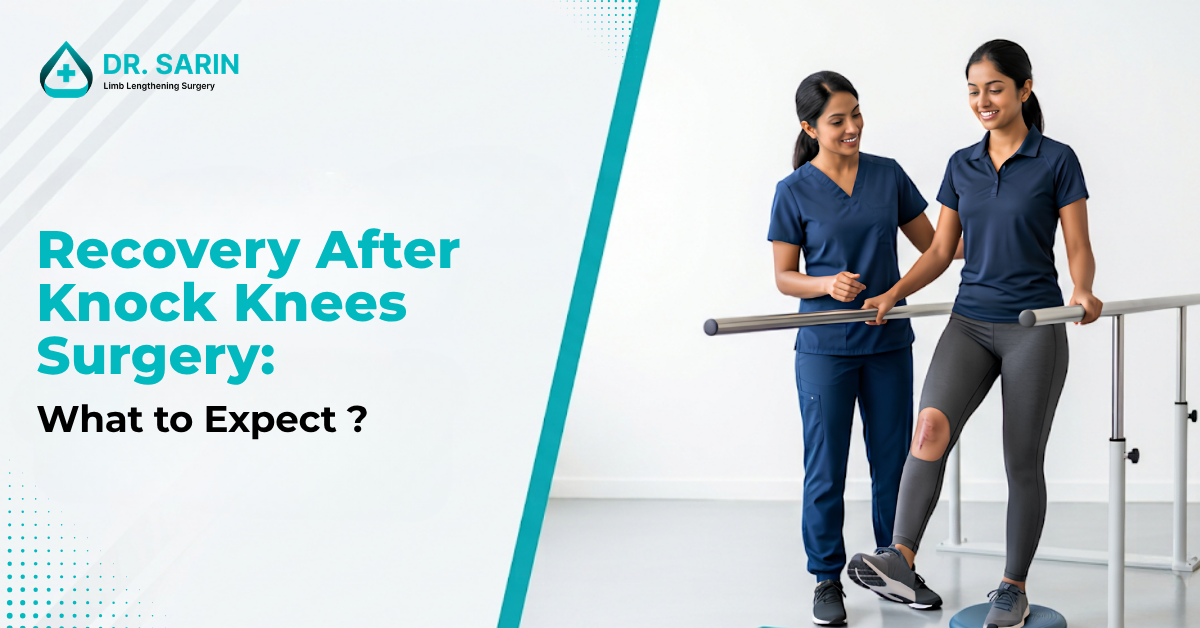
Physical Therapy
Physical therapy is one of the most commonly recommended non-surgical treatment options.
A physiotherapy program may focus on:
- Improving muscle strength
- Enhancing flexibility
- Supporting joint function
- Improving movement patterns
- Promoting better balance and coordination
Strong muscles around the hips, knees, and ankles can help support the lower limbs during daily activities.
However, it is important to understand that physical therapy primarily targets muscles and movement patterns. The extent to which it can influence bone alignment depends on the individual’s condition.
Exercise Programs
Many online resources promote exercises as a way to correct knock knees.
Exercise can play a valuable role in maintaining musculoskeletal health and improving lower limb function. Activities that strengthen the hips, thighs, and core muscles may contribute to improved stability and posture.
However, not every exercise program is appropriate for every patient.
Without understanding the degree of deformity and the underlying alignment issue, individuals may spend months performing exercises without achieving meaningful improvement.
This is one reason why professional guidance is often recommended before starting a treatment program.
Weight Management
Maintaining a healthy body weight can be beneficial for people with knock knees.
The knees support body weight throughout the day, and excess weight may increase stress on the joints. Reducing unnecessary pressure can help support overall lower limb health and mobility.
While weight management may improve comfort and function, it does not necessarily correct the underlying alignment of the bones.
The impact varies significantly from person to person.
Bracing and Orthotic Support
In certain situations, orthopedic specialists may recommend supportive devices as part of a management plan.
Braces or orthotic devices may be used to support alignment and improve lower limb mechanics in selected cases.
However, the suitability of these options depends on the patient’s age, growth stage, and the nature of the deformity.
Because inappropriate use may provide limited benefit, these interventions are generally most effective
when guided by an experienced orthopedic specialist.
The Limitations of Non-Surgical Treatment
One of the biggest misconceptions surrounding knock knees is that all cases can be corrected without surgery.
The reality is that non-surgical approaches have limitations.
When genu valgum is primarily related to bone alignment, exercises, stretching, and lifestyle modifications may not be sufficient to fully correct the deformity. These measures may improve strength, flexibility, and function, but they cannot always change the structural alignment of the bones.
This is particularly important for adults who have already reached skeletal maturity.
Understanding these limitations helps individuals develop realistic expectations about treatment outcomes.
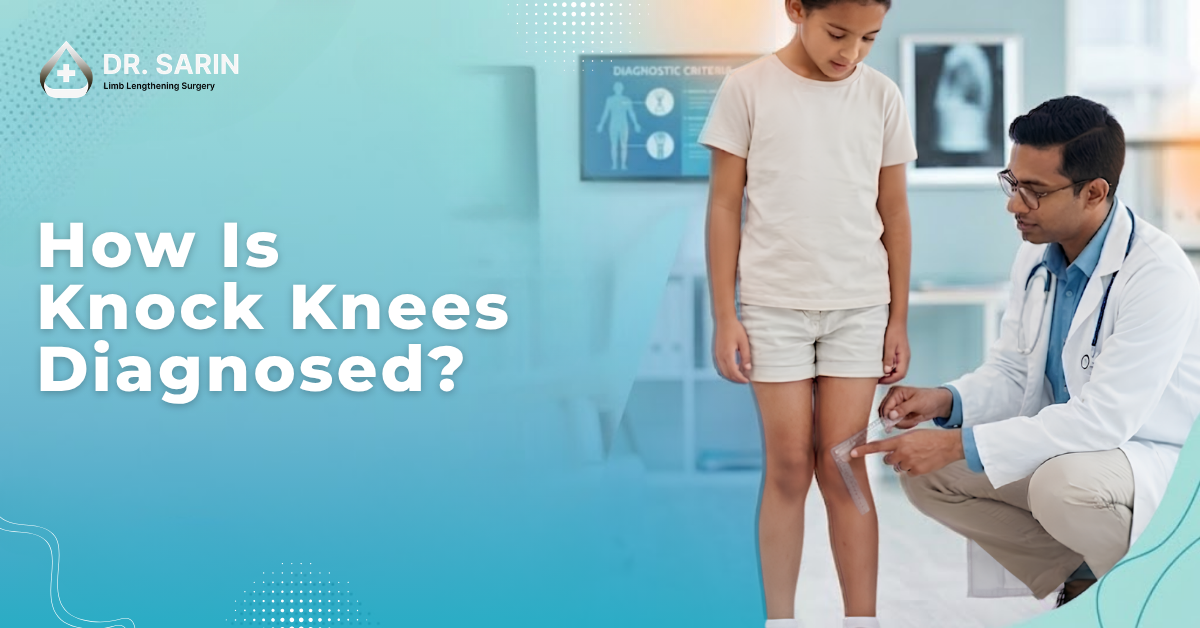
Why Professional Evaluation Is Essential?
Many patients spend considerable time searching for exercises, braces, or home remedies without first determining the severity of their condition.
The challenge is that two people with similar-looking knock knees may require completely different treatment strategies.
A detailed orthopedic evaluation helps answer important questions:
- How severe is the deformity?
- Is the condition likely to improve with conservative treatment?
- Is the alignment related to growth, muscle imbalance, or bone structure?
- What treatment approach is most appropriate?
Without these answers, choosing the right treatment becomes largely a matter of guesswork.
Expert Insight from Dr. Amar Sarin
Non-surgical treatment can play an important role in managing knock knees, but its effectiveness depends on the specific characteristics of the deformity. According to Dr. Amar Sarin, an orthopedic surgeon specializing in limb deformity correction, the first step is always a detailed evaluation of the patient’s alignment and skeletal structure. While some individuals may benefit from observation, physiotherapy, or other conservative measures, others may require a different approach. Understanding the exact nature of the deformity helps ensure that treatment recommendations are appropriate and realistic.
Conclusion: Non-Surgical Treatment for Knock Knees
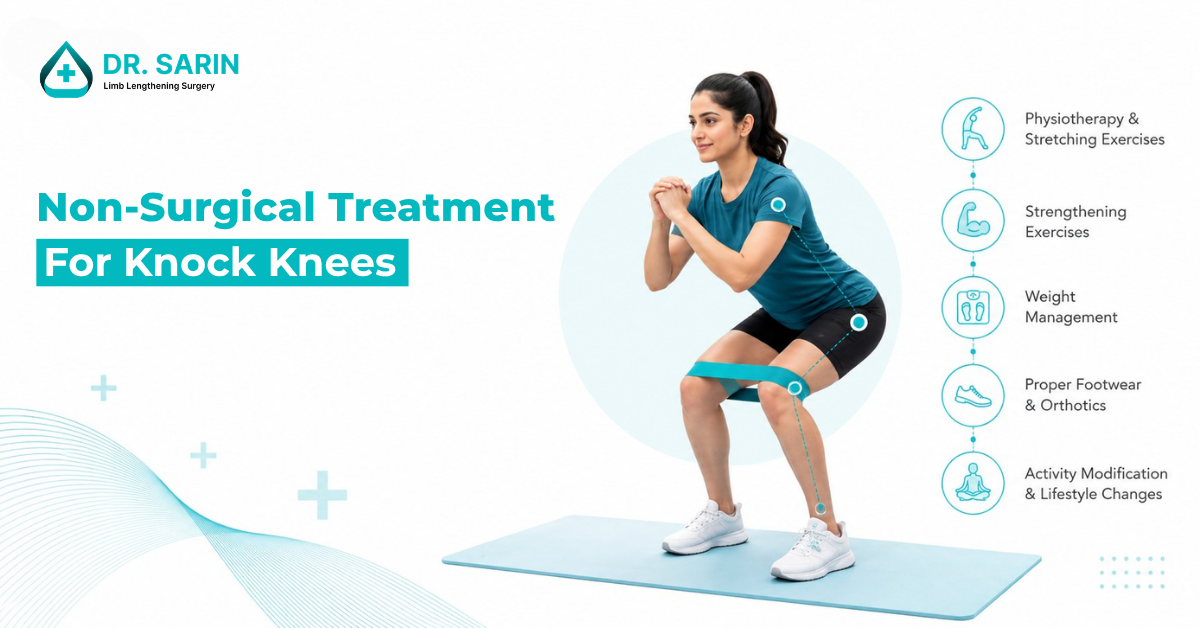
Non-surgical treatment for knock knees may include observation, physical therapy, exercise programs, weight management, and supportive orthopedic devices. These approaches can help improve strength, mobility, and overall lower limb function in selected cases.
However, not all cases of genu valgum respond equally to conservative treatment. Because the effectiveness of non-surgical management depends on factors such as age, severity, and bone alignment, a professional orthopedic evaluation remains the most reliable way to determine the most appropriate treatment strategy. Understanding the condition first can help patients avoid unnecessary delays and make informed decisions about their orthopedic care.