One of the most common concerns patients have before undergoing treatment for knock knees is whether the condition can return in the future.
Whether someone is considering non-surgical management or surgical correction, it is natural to want reassurance that the results will be long-lasting. Patients often ask questions such as:
- Can knock knees come back after treatment?
- Is the correction permanent?
- What affects long-term results?
- How can recurrence be prevented?
The answer depends on several factors, including the underlying cause of the deformity, the type of treatment performed, the patient’s age, and the accuracy of the initial diagnosis.
Understanding these factors can help patients develop realistic expectations about treatment outcomes.
Understanding Knock Knees
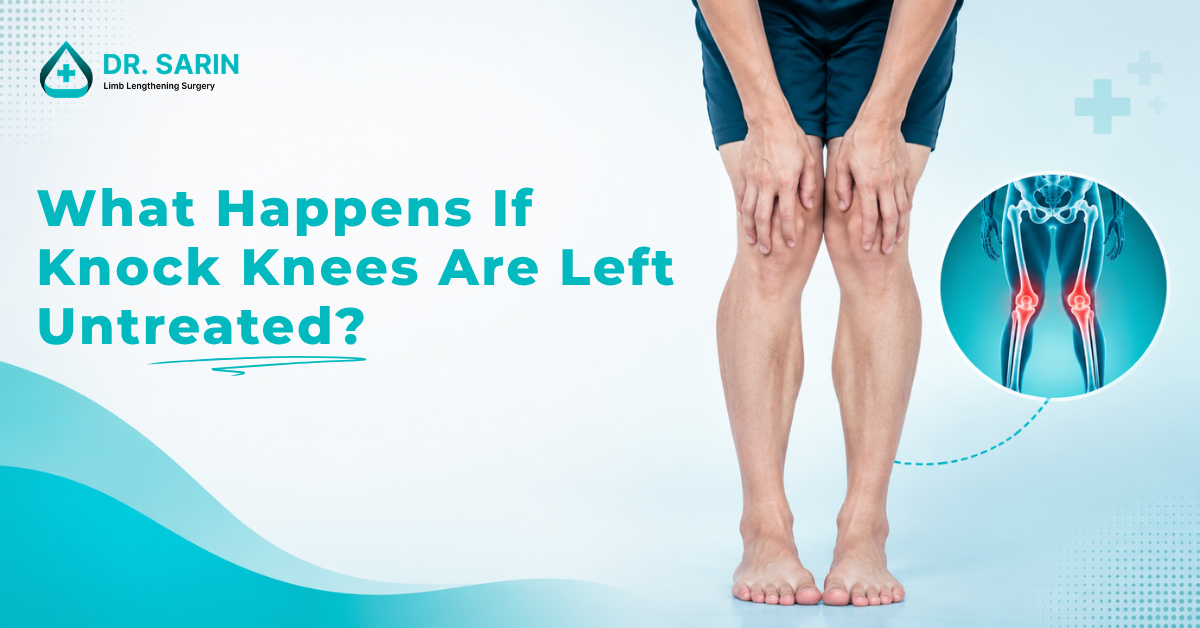
Knock knees, medically known as genu valgum, is a condition in which the knees angle inward while the ankles remain apart when standing.
The condition can affect both children and adults and may range from a mild alignment difference to a more significant deformity involving the structure of the lower limbs.
Because knock knees can develop for different reasons, the long-term outcome after treatment varies from one patient to another.
Does Every Treatment Have the Same Long-Term Outcome?
No.
The likelihood of maintaining correction depends on the type of treatment and the nature of the deformity.
For example, treatment approaches used in growing children may differ from those used in adults who have already reached skeletal maturity.
Similarly, conservative management and surgical correction have different goals and expectations.
This is one reason why individualized treatment planning is so important.
Why Accurate Diagnosis Matters
Long-term success begins with an accurate diagnosis.
Before recommending any treatment, orthopedic specialists need to understand:
- The severity of the deformity
- The source of the alignment problem
- Skeletal maturity
- Overall lower limb mechanics
- The patient’s treatment goals
Without understanding these factors, it becomes difficult to determine which treatment approach is most appropriate.
A well-planned treatment strategy often contributes significantly to long-term stability.
Can Knock Knees Return After Non-Surgical Treatment?
The outcome of non-surgical treatment depends largely on the nature of the condition.
Non-surgical approaches may focus on:
- Observation
- Physical therapy
- Exercise programs
- Weight management
- Orthotic support
These strategies can play an important role in managing selected cases. However, when genu valgum is primarily related to bone alignment, conservative measures may have limitations.
Because every patient is different, the durability of results varies depending on the underlying cause and the individual’s response to treatment.
Can Knock Knees Return After Surgery?
Many patients assume that surgery automatically guarantees identical results for every person.
In reality, successful outcomes depend on several factors, including:
- Accurate deformity analysis
- Proper surgical planning
- Precise correction
- Bone healing
- Post-operative rehabilitation
When surgical correction is carefully planned and executed, the goal is to achieve stable alignment. However, each patient must be evaluated individually, and long-term outcomes depend on multiple factors rather than a single procedure alone.
This is why experienced deformity correction specialists place so much emphasis on pre-operative planning and follow-up care.
Why Follow-Up Care Is Important
Treatment does not end when the procedure or therapy is completed.
Follow-up appointments allow orthopedic specialists to:
- Monitor healing
- Assess alignment
- Evaluate recovery progress
- Identify potential concerns early
Regular monitoring helps ensure that the correction remains on track and provides patients with guidance throughout their recovery journey.
Patients who actively participate in follow-up care often gain a better understanding of their long-term progress.
Factors That Influence Long-Term Results
Several factors can affect how well correction is maintained over time.
These include:
- Age at the time of treatment
- Skeletal maturity
- Severity of the deformity
- Underlying cause of genu valgum
- Quality of treatment planning
- Adherence to rehabilitation recommendations
Because these variables differ from one patient to another, long-term outcomes are highly individualized.
Why Internet Comparisons Can Be Misleading
Patients often search online for stories from others who have undergone treatment.
While personal experiences can be informative, they do not always reflect another person’s situation.
Two patients may appear to have similar knock knees but differ significantly in:
- Alignment measurements
- Bone structure
- Treatment approach
- Recovery process
As a result, comparing outcomes without understanding these differences can create unrealistic expectations.
A professional assessment provides far more meaningful information than generalized online comparisons.
The Importance of Choosing the Right Specialist
One of the most important factors influencing long-term outcomes is the quality of the initial evaluation and treatment plan.
Successful management of knock knees requires:
- Detailed deformity analysis
- Accurate alignment assessment
- Individualized treatment planning
- Ongoing follow-up care
These elements help ensure that treatment decisions are based on the patient’s unique anatomy and needs.
For this reason, many patients choose to consult specialists who focus specifically on deformity correction and lower limb alignment.
Expert Insight from Dr. Amar Sarin
According to Dr. Amar Sarin, an orthopedic surgeon specializing in limb deformity correction, long-term success begins with understanding the exact nature of the deformity. Proper diagnosis, careful treatment planning, precise execution, and structured follow-up care all contribute to achieving stable alignment. Because every patient presents with a unique pattern of genu valgum, individualized evaluation remains essential for determining the most appropriate treatment approach and optimizing long-term outcomes.
Conclusion: Can Knock Knees Return After Treatment?
Can knock knees return after treatment? The answer depends on the underlying cause of the condition, the treatment performed, and the individual patient’s circumstances.
Long-term outcomes are influenced by accurate diagnosis, appropriate treatment selection, careful planning, and ongoing follow-up care.
Rather than focusing solely on whether recurrence is possible, patients should focus on ensuring that their condition is properly evaluated and managed by an experienced orthopedic specialist.
A comprehensive assessment provides the foundation for informed treatment decisions and the best possible long-term results.