Patients considering treatment for knock knees often want to know one thing above all else: What kind of results can I expect?
It is natural to search for before-and-after photographs, patient stories, and examples of successful treatment outcomes. While these resources can be helpful, it is important to understand that every case of knock knees is unique.
The results achieved after treatment depend on several factors, including the severity of the deformity, the patient’s age, the underlying cause of the condition, and the type of treatment performed.
Understanding what influences treatment outcomes can help patients develop realistic expectations and make informed decisions about their orthopedic care.
Understanding Knock Knees
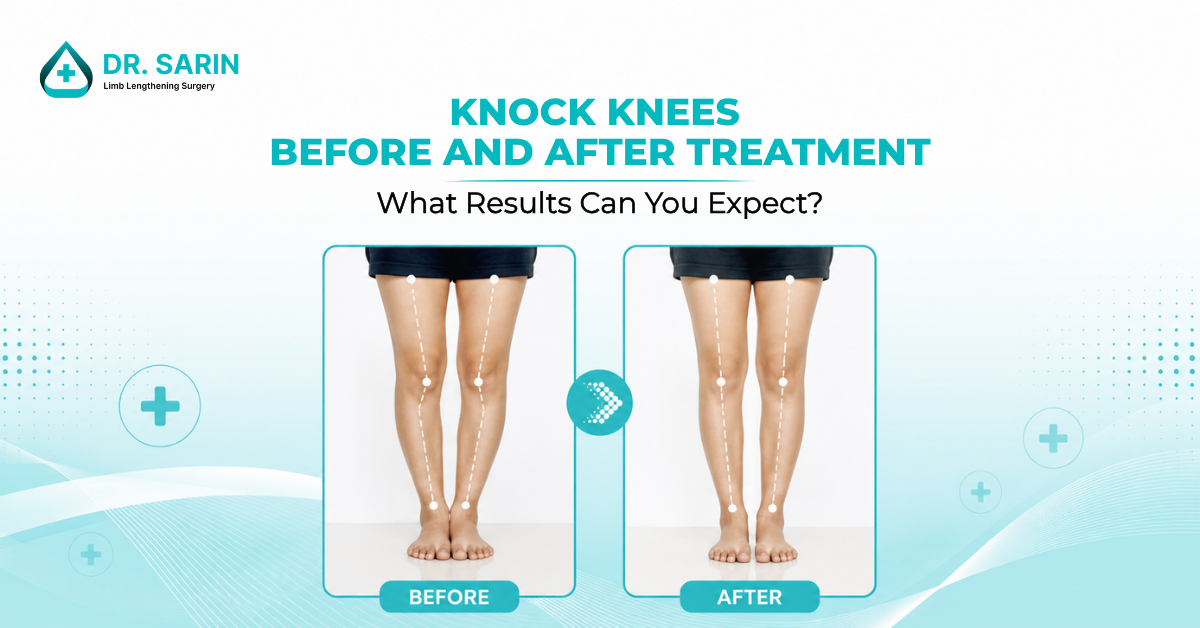
Knock knees, medically known as genu valgum, is a condition in which the knees angle inward while the ankles remain apart when standing.
The condition affects lower limb alignment and changes the relationship between the hips, knees, and ankles. While some people have only a mild alignment difference, others may have a more noticeable deformity.
Because the degree of genu valgum varies significantly, treatment outcomes can also vary from one patient to another.
Why Before-and-After Results Differ Between Patients
One of the biggest misconceptions about orthopedic treatment is that every patient will achieve identical results.
In reality, treatment outcomes are influenced by factors such as:
- Severity of the deformity
- Bone structure
- Skeletal maturity
- Overall lower limb alignment
- Type of treatment performed
- Individual healing response
Two patients with similar-looking knock knees may have very different underlying alignment patterns.
As a result, their treatment plans and outcomes may not be exactly the same.
What Do Doctors Mean by “Correction”?
When discussing results, orthopedic specialists often focus on alignment correction rather than appearance alone.
The goal of treatment is to improve the relationship between the hip, knee, and ankle by addressing the underlying cause of the deformity.
This approach aims to improve lower limb mechanics and create better overall alignment.
While appearance often improves as alignment improves, successful treatment is not based solely on cosmetic changes.
What Changes May Be Seen After Treatment?
The specific changes vary depending on the patient and treatment approach.
Potential improvements may include:
- Better lower limb alignment
- Reduced inward angulation of the knees
- Improved leg symmetry
- More balanced posture
- Improved overall appearance of the legs
The degree of visible improvement depends on the severity of the original deformity and the correction achieved.
How Long Does It Take to See Results?
Many patients expect immediate final results after treatment.
However, orthopedic correction is a process rather than a single event.
Recovery often involves:
- Healing
- Rehabilitation
- Adaptation to the corrected alignment
- Ongoing follow-up assessment
As recovery progresses, patients gradually gain a clearer understanding of their final outcome.
Patience is important because healing timelines vary between individuals.
Why Online Before-and-After Photos Can Be Misleading
Before-and-after photographs are popular because they provide a visual representation of treatment outcomes.
However, these images rarely tell the complete story.
Photographs typically do not show:
- The severity of the original deformity
- The patient’s age
- Alignment measurements
- The complexity of treatment
- Recovery progress
Without this information, comparisons can be misleading.
The most meaningful prediction of results comes from a professional evaluation of the patient’s own condition.
The Importance of Individualized Treatment Planning
Successful outcomes begin long before treatment starts.
Orthopedic specialists perform detailed assessments to determine:
- The source of the deformity
- The degree of correction required
- Overall lower limb alignment
- Appropriate treatment options
This planning process helps ensure that treatment is tailored to the patient’s specific anatomy and needs.
Accurate planning is one of the most important factors influencing final results.
Why Realistic Expectations Matter
Patients naturally want the best possible outcome.
However, realistic expectations are essential.
The purpose of treatment is not simply to create straighter-looking legs. The goal is to improve alignment in a way that is appropriate for the individual’s anatomy and condition.
Understanding what treatment can realistically achieve helps patients feel more confident and informed throughout the process.
Why Choosing an Experienced Specialist Is Important
The quality of the evaluation and treatment plan plays a major role in determining outcomes.
Successful deformity correction requires:
- Accurate diagnosis
- Detailed alignment analysis
- Careful treatment planning
- Proper execution
- Structured follow-up care
These elements work together to support optimal results.
For this reason, many patients seek care from orthopedic surgeons with specific expertise in deformity correction and lower limb alignment.
Expert Insight from Dr. Amar Sarin
According to Dr. Amar Sarin, an orthopedic surgeon specializing in limb deformity correction, successful treatment outcomes begin with understanding the exact nature of the deformity. Every patient presents with a unique alignment pattern, which is why individualized evaluation and treatment planning are essential. Rather than focusing solely on photographs or generalized expectations, patients benefit most from a detailed assessment that helps determine what improvements can realistically be achieved in their specific case.
How Can You Understand Your Likely Results?
The most reliable way to understand potential treatment outcomes is through a professional consultation.
During an evaluation, an orthopedic specialist can assess:
- The severity of genu valgum
- Lower limb alignment
- Skeletal maturity
- Treatment options
- Expected correction
This personalized assessment provides far more useful information than general online examples or photographs.
Conclusion: What Results Can You Expect After Knock Knees treatment?
Before-and-after results for knock knees treatment vary from one patient to another. Factors such as deformity severity, age, bone structure, treatment type, and healing response all influence the final outcome.
While many patients experience significant improvements in alignment and leg appearance, realistic expectations should always be based on a thorough orthopedic evaluation rather than comparisons with online images. Understanding the condition, exploring treatment options, and consulting an experienced deformity correction specialist are the best ways to gain a clear picture of what results may be possible in your specific case.