How to Correct Bow Legs in Babies?: Many parents notice something unusual when their baby begins standing or taking their first steps.
The legs appear curved outward.
The knees stay apart.
And naturally, questions start racing through their minds.
“Is this normal?”
“Will my baby’s legs straighten on their own?”
“Do bow legs need treatment?”
The reassuring news is that bow legs in babies are extremely common.
In most cases, they are simply a normal part of growth and development.
However, there are situations where persistent bowing may indicate an underlying condition that requires medical attention.
Understanding the difference can help parents make informed decisions and avoid unnecessary worry.
In this guide, we’ll explain how to correct bow legs in babies, when treatment is needed, and when it’s perfectly normal to simply watch and wait.
What Are Bow Legs in Babies?
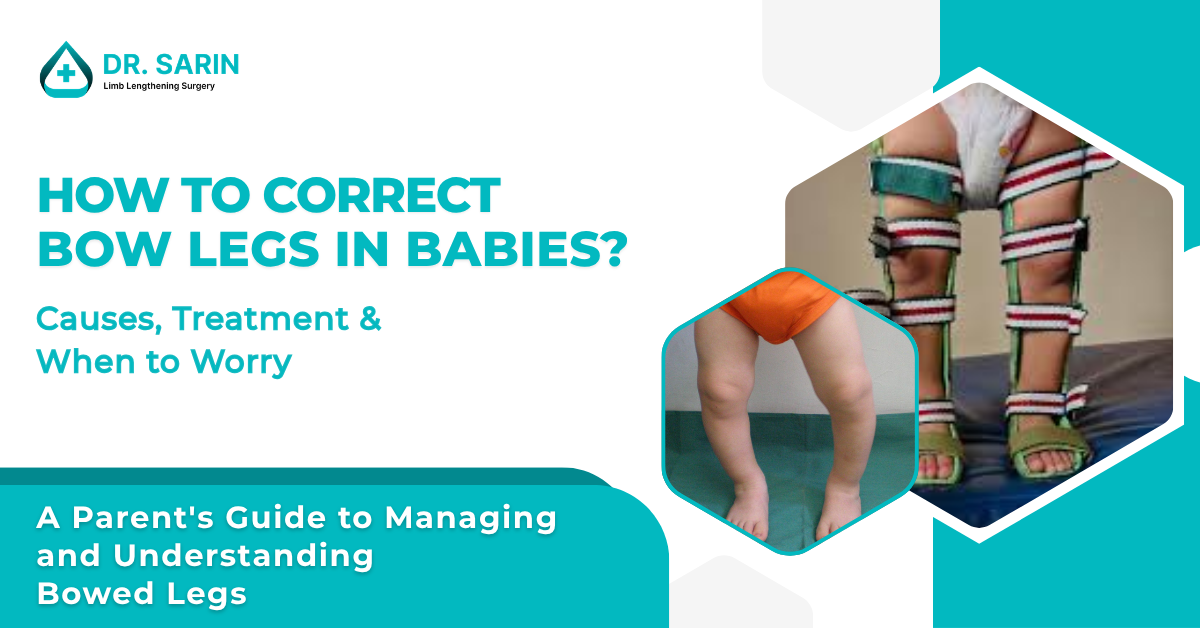
Bow legs, medically known as Genu Varum, occur when a child’s legs curve outward while the ankles remain together.
When the baby stands:
- The feet and ankles may touch
- The knees stay apart
- The legs create a bow-like appearance
For infants and toddlers, this is often considered a normal stage of development.
Most babies are born with some degree of bowing because of their position inside the womb.
As they grow and begin walking, the legs usually straighten naturally.
Are Bow Legs Normal in Babies?
In most cases, yes.
Physiological bowing is a normal developmental condition that affects many infants and toddlers.
Typically:
- Bowing is visible during infancy
- It gradually improves as the child grows
- Most children show significant correction by age 2
- The legs continue aligning naturally through early childhood
For many children, no treatment is necessary.
The condition simply resolves with growth.
Why Do Babies Have Bow Legs?
Several factors can contribute to bowing during infancy.
Natural Fetal Positioning
Before birth, babies spend months in a curled position inside the womb.
This natural positioning can temporarily influence leg alignment.
After birth, as bones continue developing, the legs gradually straighten.
Early Walking Development
As toddlers learn to stand and walk, the lower limbs undergo constant changes.
Temporary bowing is often part of this normal developmental process.
Growth Variations
Every child develops at a different pace.
Some children may appear more bow-legged than others while still remaining completely healthy.
When Should Parents Be Concerned?
Although most cases are harmless, certain signs may indicate a condition that requires evaluation.
Parents should consider consulting a pediatric orthopedic specialist if:
- Bowing becomes worse over time
- Only one leg appears affected
- The child experiences pain
- Walking becomes difficult
- Bowing remains significant after age 2-3 years
- The child is unusually short for their age
- The legs appear severely curved
These signs may suggest an underlying medical condition rather than normal developmental bowing.
Conditions That Can Cause Persistent Bow Legs
Sometimes bow legs do not improve naturally.
Common causes include:
Blount’s Disease
Blount’s disease affects the growth plate of the shin bone and causes progressive bowing.
Unlike normal developmental bowing, this condition often worsens over time.
Rickets
Rickets occurs when bones become soft due to deficiencies in:
- Vitamin D
- Calcium
- Phosphorus
Weak bones may bend under the child’s weight, resulting in bow legs.
Skeletal Disorders
Certain rare bone growth disorders can affect alignment and require specialist management.
How Are Bow Legs Evaluated in Babies?
When parents seek medical advice, the evaluation usually begins with a physical examination.
The doctor may assess:
- Leg alignment
- Walking pattern
- Overall growth
- Symmetry of both legs
If needed, additional investigations may include:
X-Rays:
These help identify:
- Growth plate abnormalities
- Bone deformities
- Severity of bowing
Blood Tests:
Blood tests may be recommended when nutritional deficiencies or metabolic bone disorders are suspected.
How to Correct Bow Legs in Babies?
The treatment approach depends entirely on the cause.
In many cases, correction happens naturally without intervention.
Observation and Monitoring
This is the most common approach.
If the bowing is part of normal growth, the doctor may simply monitor the child during routine visits.
Parents are often advised to:
- Observe changes over time
- Attend follow-up appointments
- Monitor walking development
Many children improve naturally without any treatment.
Nutritional Support
If nutritional deficiencies contribute to bone weakness, treatment may involve correcting those deficiencies.
A healthcare provider may recommend:
- Vitamin D supplementation
- Calcium-rich nutrition
- Appropriate dietary adjustments
Healthy bone development is essential for proper leg alignment.
Bracing
In selected cases, particularly early Blount’s disease, bracing may help guide growth and improve alignment.
Bracing is not typically required for normal developmental bowing.
Surgical Treatment
Surgery is rarely needed for typical bow legs in babies.
However, it may be considered when:
- Significant deformity persists
- Growth abnormalities are present
- Blount’s disease progresses
- Other corrective measures are ineffective
The decision is always based on the child’s age, severity of the condition, and underlying diagnosis.
If your child’s bow legs are severe, continue to worsen, or are caused by an underlying condition that requires medical intervention, Contact Dr. Amar Sarin for Bow Legs Treatment and Corection surgery to receive a comprehensive evaluation and discuss the most appropriate treatment options.
What Parents Should Avoid?
Parents often encounter advice online suggesting home remedies for bow legs.
It’s important to understand that:
- Special shoes do not correct normal bow legs
- Walking aids do not straighten bones
- Unverified treatments may delay proper care
The safest approach is professional evaluation when concerns arise.
Will My Baby’s Legs Straighten Naturally?
For most children, the answer is yes.
Normal developmental bowing typically improves with growth.
As the bones mature and weight-bearing patterns change, the legs gradually move toward proper alignment.
This process often occurs over several years and varies from child to child.
Patience is often the most important part of treatment.
Long-Term Outlook
Children with physiological bowing generally grow into healthy, active adults without complications.
When underlying conditions are identified early, modern treatment options can effectively manage the problem and support normal development.
Regular monitoring helps ensure that any concerns are addressed promptly.
Final Thoughts: How to Correct Bow Legs in Babies?
Parents are often understandably concerned when they notice bowed legs in their baby.
Fortunately, most cases are a normal part of childhood development and improve naturally over time.
Understanding how to correct bow legs in babies begins with recognizing that treatment isn’t always necessary.
The key is identifying when bowing is simply part of normal growth and when it may signal an underlying condition.
If you’re uncertain about your child’s leg alignment, consulting a pediatric orthopedic specialist can provide clarity, reassurance, and guidance for the best possible outcome.
FAQs: Bow Legs in Babies
Q 1. Are bow legs normal in babies?
Ans: Yes. It is common for infants and toddlers to have mild bow legs, which often improve without treatment as they grow.
Q 2. At what age should bow legs straighten?
Ans: Most children show significant improvement by age 2, with continued alignment changes occurring through early childhood.
Q 3. Can bow legs in babies correct themselves?
Ans: Yes. Most cases of physiological bowing resolve naturally without treatment.
Q 4. When should I worry about my baby’s bow legs?
Ans: Medical evaluation is recommended if bowing worsens, affects only one leg, causes pain, or remains significant after age 2–3 years.
Q 5. Do all babies with bow legs need surgery?
Ans: No. Surgery is rarely required and is generally reserved for severe deformities or specific medical conditions such as advanced Blount’s disease.