Many people who notice their knees turning inward often ask the same question: Can knock knees be corrected? Whether the condition has been present since childhood or has become more noticeable over time, it is natural to wonder if the alignment of the legs can be improved.
The simple answer is yes, knock knees can often be corrected. However, the approach depends on several factors, including a person’s age, the severity of the alignment, and the underlying reason for the condition. Because every case is different, understanding how knock knees develop and how correction is possible can help individuals make informed decisions about their orthopedic health.
Understanding Knock Knees
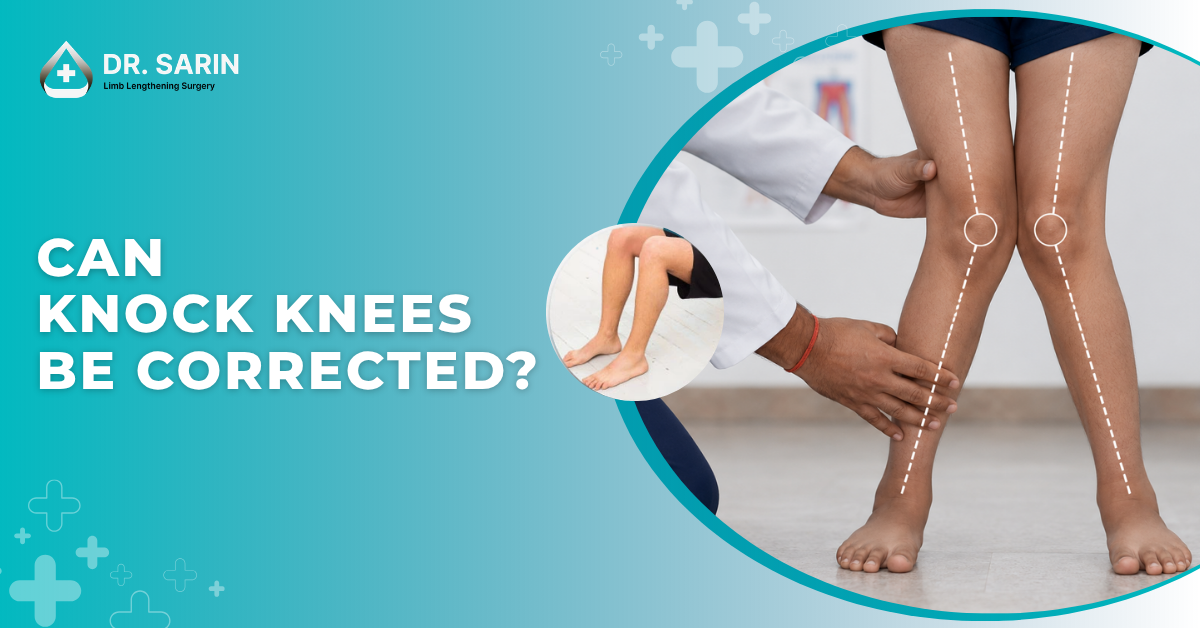
Knock knees, medically known as genu valgum, is a condition in which the knees angle inward while the ankles remain apart when standing. The inward positioning of the knees changes the alignment of the lower limbs and creates the characteristic appearance associated with the condition.
The degree of knock knees can vary significantly. Some individuals have a mild alignment difference that causes little concern, while others may have a more noticeable change in the positioning of their legs.
Because the condition exists on a spectrum, the possibility of correction can also vary from one person to another.
Can Knock Knees Correct Themselves?
In some situations, knock knees may improve without specific intervention. This is particularly true during certain stages of childhood growth and development.
As children grow, their leg alignment naturally changes. In many cases, the knees gradually move toward a more balanced alignment as skeletal development continues. This is why mild knock knees seen during normal childhood growth may improve over time.
However, not all cases resolve on their own. When knock knees persist beyond the expected stages of development or become more pronounced, further evaluation may be beneficial.
Can Knock Knees Be Corrected in Adults?
A common misconception is that knock knees can only be corrected during childhood. In reality, adults can also seek correction for genu valgum.
Unlike children, adults have completed their skeletal growth. This means the bones no longer change naturally through growth and development. However, the alignment of the legs can still be addressed through appropriate orthopedic management when necessary.
The extent of correction depends on the individual’s alignment, overall bone structure, and specific circumstances. Many adults seek professional advice after noticing that the appearance of their legs has remained unchanged for years or has become more noticeable over time.
Can Mild Knock Knees Be Improved?
Mild knock knees may require a different approach than more significant alignment changes. In some individuals, the condition is largely cosmetic and causes little functional concern. Others may notice only a slight inward angle when standing.
The degree of improvement that can be achieved often depends on the severity of the alignment difference. Because every person’s anatomy is unique, there is no single answer that applies to everyone.
This is one reason why individualized assessment is important when discussing whether knock knees can be corrected.
Can Severe Knock Knees Be Corrected?
People with more noticeable genu valgum often wonder whether significant alignment changes can be improved. The answer is generally yes, although the correction process may differ depending on the extent of the deformity.
Modern orthopedic techniques have made it possible to address a wide range of lower limb alignment conditions. The specific strategy used depends on factors such as age, bone structure, and the degree of angular deformity.
Even when knock knees are severe, understanding the available options can help individuals better evaluate their situation and determine the most appropriate path forward.
Can Knock Knees Be Fixed Permanently?
Another frequently asked question is whether knock knees can be fixed permanently.
The answer depends on the underlying cause of the condition and the method used to address it. In cases where the alignment of the bones is corrected, the improvement is typically intended to provide long-term alignment changes.
However, every individual is different. Long-term outcomes can be influenced by factors such as bone health, joint condition, overall body mechanics, and lifestyle considerations.
This is why personalized evaluation remains an important part of understanding what level of correction may be possible.
Can Knock Knees Be Reversed Naturally?
Many people search online for natural ways to reverse knock knees. While maintaining good overall health, strength, and mobility is important, the possibility of naturally changing bone alignment depends on several factors.
In growing children, natural developmental changes may influence alignment over time. In adults, however, the bones have already matured, which limits the body’s ability to naturally alter skeletal alignment.
Because the causes and severity of knock knees vary widely, there is no universal natural solution that works for everyone. Understanding the specific nature of the condition is essential before considering any approach.
Why Professional Evaluation Matters
The question “Can knock knees be corrected?” cannot always be answered with a simple yes or no. The most accurate answer depends on the individual’s age, alignment pattern, medical history, and overall orthopedic condition.
A professional evaluation helps determine the degree of genu valgum and whether the alignment falls within expected limits or requires further attention. It also provides a clearer understanding of what type of correction may be possible and what outcomes can realistically be expected.
Because no two cases are identical, personalized assessment plays a key role in understanding available options.
Expert Insight from Dr. Amar Sarin
The possibility of correcting knock knees depends on several factors, including the severity of the deformity and the individual’s stage of skeletal development.
According to Dr. Amar Sarin, an orthopedic surgeon with extensive experience in Knock Knees Correction Surgery, many cases of genu valgum can be evaluated and managed based on the patient’s specific alignment and orthopedic needs. A detailed assessment helps determine the nature of the condition and provides valuable insight into the options that may be available for improving lower limb alignment.
Conclusion: Can Knock Knees Be Corrected?
So, can knock knees be corrected? In many cases, yes. The potential for correction depends on factors such as age, severity, bone structure, and the underlying reason for the condition.
While some cases may improve naturally during growth, others may persist into adulthood and require professional evaluation. Understanding the condition and seeking expert guidance can help individuals gain a clearer understanding of their alignment and the possibilities for correction. With modern orthopedic knowledge and treatment approaches, many people are able to explore options that support improved lower limb alignment and overall function.