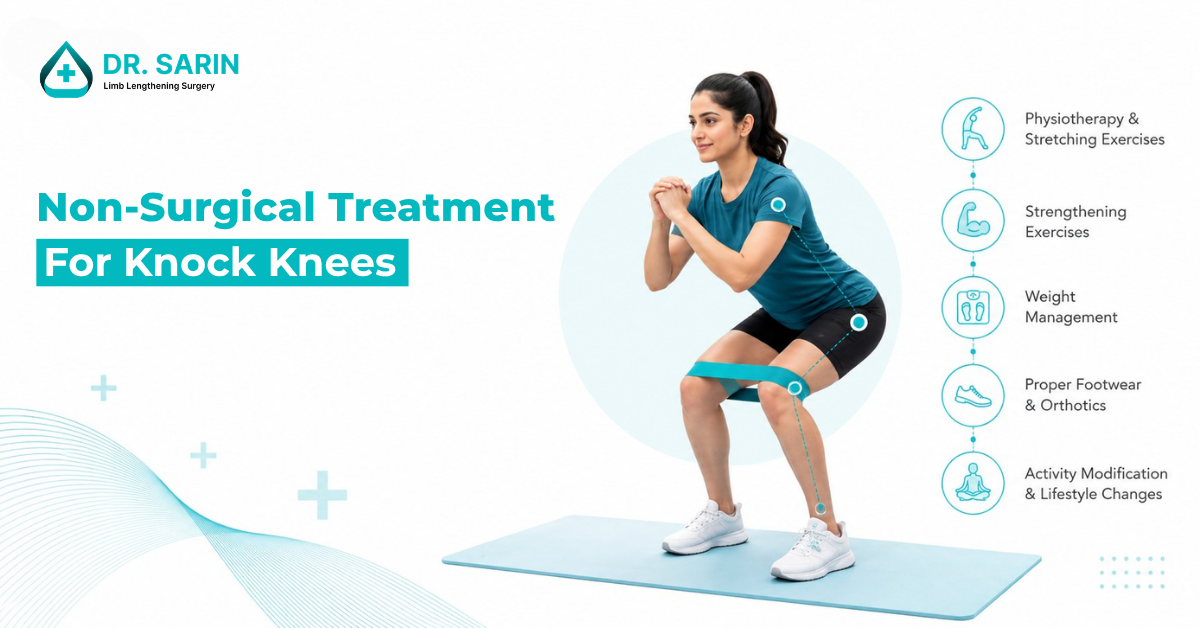
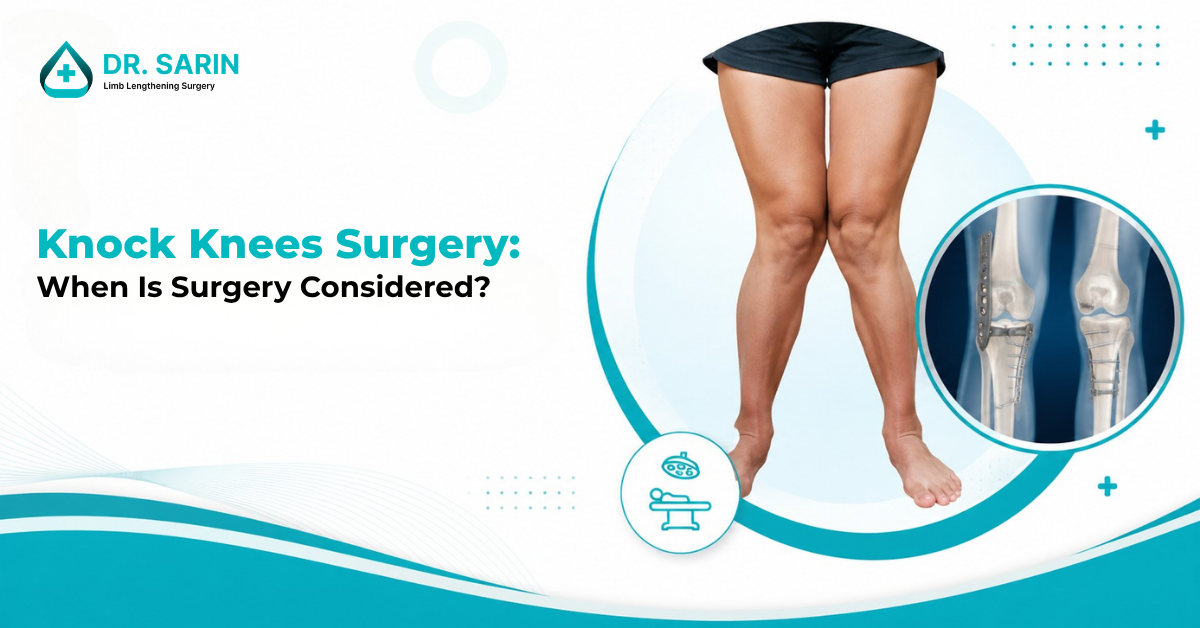
Knock knees, medically known as genu valgum, is a condition in which the knees angle inward while the ankles remain apart when standing. While some cases are mild and may not require significant intervention, others involve more noticeable alignment differences that can affect the overall structure of the lower limbs.
After learning about non-surgical treatment options, many patients begin asking another important question: Will I need surgery for knock knees?
The answer depends on several factors, including age, the severity of the deformity, skeletal maturity, and the underlying cause of the condition. Understanding when surgery may be considered can help individuals make informed decisions about their orthopedic health.
Is Surgery Necessary for Every Case of Knock Knees?
No.
Not every person with knock knees requires surgery.
Many cases are mild and may simply represent a variation in leg alignment. In children, some alignment changes may improve naturally during growth. Other individuals may benefit from observation or conservative management depending on their specific situation.
Because genu valgum exists on a spectrum, treatment recommendations vary significantly from one patient to another.
The most important step is understanding the severity of the deformity before deciding whether surgery should even be considered.
Why Is Severity Important?
One of the key factors influencing treatment decisions is the degree of lower limb alignment.
Two individuals may appear to have similar knock knees, but detailed orthopedic evaluation often reveals important differences in bone alignment and deformity severity.
A mild alignment variation may be managed very differently from a significant angular deformity.
This is why visual appearance alone is rarely enough to determine whether surgery is appropriate.
When Might Surgery Be Considered?
Surgical treatment may be considered when the alignment difference is significant and the deformity involves the underlying structure of the bones.
The decision depends on multiple factors, including:
- Degree of genu valgum
- Skeletal maturity
- Bone alignment
- Overall lower limb mechanics
- Individual treatment goals
Because each patient’s situation is unique, there is no universal threshold that applies to everyone.
A detailed orthopedic assessment helps determine whether surgical correction may be beneficial.
Can Adults Undergo Knock Knee Surgery?
Yes.
Many adults assume that because they have completed growth, nothing can be done about their alignment. However, modern orthopedic deformity correction techniques have made it possible to address genu valgum in adults.
The treatment approach differs from that used in growing children because adult bones have already reached skeletal maturity.
As a result, the correction strategy is based on the existing bone alignment and overall structure of the lower limbs.
What Is the Goal of Knock Knee Surgery?
The primary goal of surgery is to improve lower limb alignment.
Proper alignment helps create a more balanced relationship between the hips, knees, and ankles. Modern deformity correction procedures are designed to address the underlying structural cause of the alignment difference rather than simply treating its appearance.
The exact objectives vary depending on the patient’s anatomy and treatment goals.
Because every case is different, surgical planning is highly individualized.
How Is Surgical Planning Performed?
One of the most important parts of deformity correction occurs before surgery even begins.
Orthopedic specialists perform detailed evaluations to understand:
- The location of the deformity
- The degree of angular correction required
- The relationship between the hip, knee, and ankle
- The patient’s overall lower limb alignment
Accurate planning plays a critical role in achieving optimal correction.
This is one reason why choosing an experienced deformity correction specialist is so important.
Why Self-Diagnosis Can Be Misleading?
Many patients attempt to determine whether they need surgery by comparing their legs to photographs found online.
Unfortunately, genu valgum cannot be accurately evaluated through appearance alone.
The same outward appearance may represent very different alignment patterns internally. Without proper imaging and orthopedic assessment, it is impossible to determine the true nature of the deformity.
This often leads patients either to underestimate or overestimate the severity of their condition.
Why Early Evaluation Matters?
Some individuals spend years searching for exercises, braces, or online remedies without first understanding whether their alignment issue is primarily muscular or structural.
A detailed evaluation provides clarity regarding:
- The severity of the deformity
- The source of the alignment problem
- Whether non-surgical options are likely to be effective
- Whether surgical correction should even be considered
This information allows patients to make informed decisions rather than relying on guesswork.
Expert Insight from Dr. Amar Sarin
The decision to consider knock knee surgery should always be based on a detailed understanding of the individual’s alignment and skeletal structure. According to Dr. Amar Sarin, an orthopedic surgeon specializing in limb deformity correction, accurate diagnosis and deformity analysis are essential before recommending any treatment plan. Many patients are surprised to learn that two seemingly similar cases may require very different approaches. A comprehensive orthopedic evaluation helps determine whether surgical correction is appropriate and what outcomes can realistically be expected.
Conclusion: When Knock Knees Surgery Is Surgery Considered?
Knock knees surgery is not necessary for every patient. The need for surgical correction depends on factors such as the severity of the deformity, skeletal maturity, and overall lower limb alignment.
Because genu valgum can vary significantly from one individual to another, the most important step is obtaining an accurate evaluation of the condition. Understanding the true nature of the deformity allows patients to explore the most appropriate treatment options and make informed decisions about their orthopedic care.
If you are unsure about the severity of your knock knees or whether surgery may be an option, consulting an experienced deformity correction specialist can provide the clarity needed to understand your condition and potential treatment pathways.