Many people who have knock knees often wonder whether the condition can be improved and, more importantly, how correction is achieved.
The answer depends on several factors, including age, the severity of the alignment, and the underlying reason for the condition. There is no single approach that works for everyone. Understanding how knock knees are corrected can help individuals gain a clearer picture of the options that may be available.
Understanding Knock Knee Correction
Before discussing correction, it is important to understand that knock knees can vary significantly from person to person. Some individuals have only a mild inward angulation of the knees, while others may experience a more noticeable change in lower limb alignment.
Because genu valgum exists on a spectrum, the method of correction is often tailored to the individual’s specific situation. Factors such as bone structure, growth stage, and overall orthopedic health all influence the approach that may be considered.
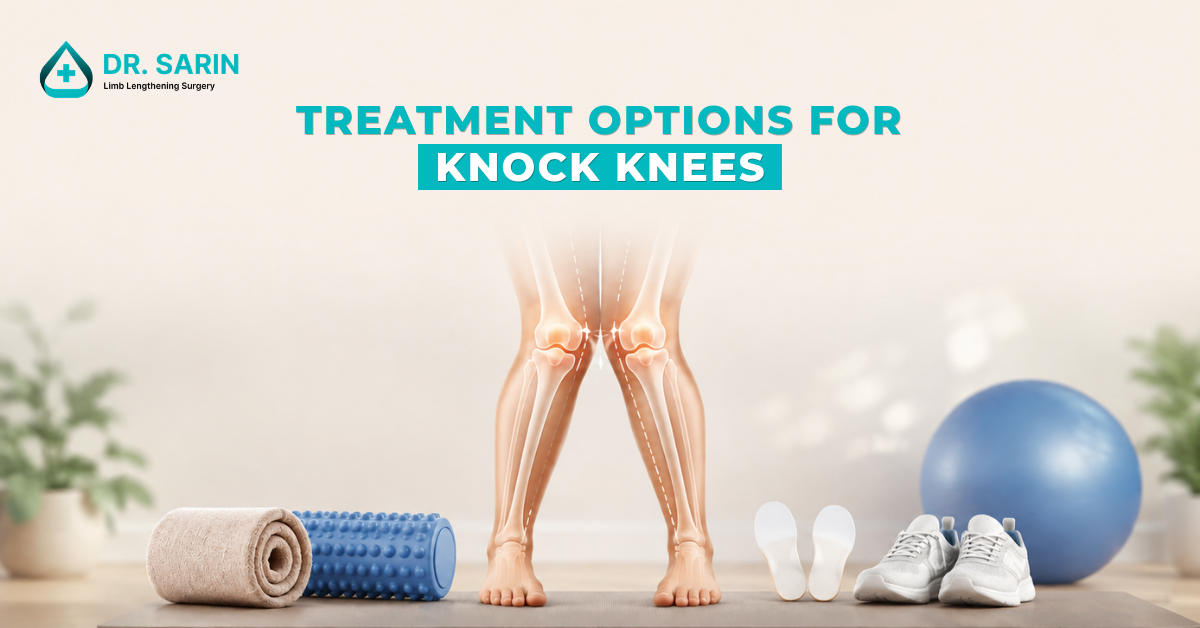
Correction focuses on improving lower limb alignment and restoring a more balanced relationship between the hips, knees, and ankles.
Correcting Knock Knees in Children
Children are still growing, which means their bones and growth plates continue to develop. During certain stages of childhood, knock knees may be a normal part of growth and can improve as skeletal development progresses.
When correction is considered in growing children, the approach often takes advantage of the body’s natural growth potential. Since the bones are still developing, alignment may change over time under appropriate orthopedic guidance.
The specific strategy depends on the child’s age, growth potential, and the degree of genu valgum present.
Correcting Knock Knees in Adults
Adults have completed skeletal growth, which means their bones no longer change naturally through growth and development. As a result, correcting knock knees in adults requires a different approach than in children.
Adult correction focuses on addressing the existing alignment of the lower limbs. The method chosen depends on the severity of the deformity, the condition of the joints, and the individual’s overall orthopedic health.
Many adults seek correction because they are concerned about the appearance of their legs, while others want to better understand their alignment and available options.
Can Exercises Correct Knock Knees?
One of the most frequently asked questions is whether exercises can correct knock knees.
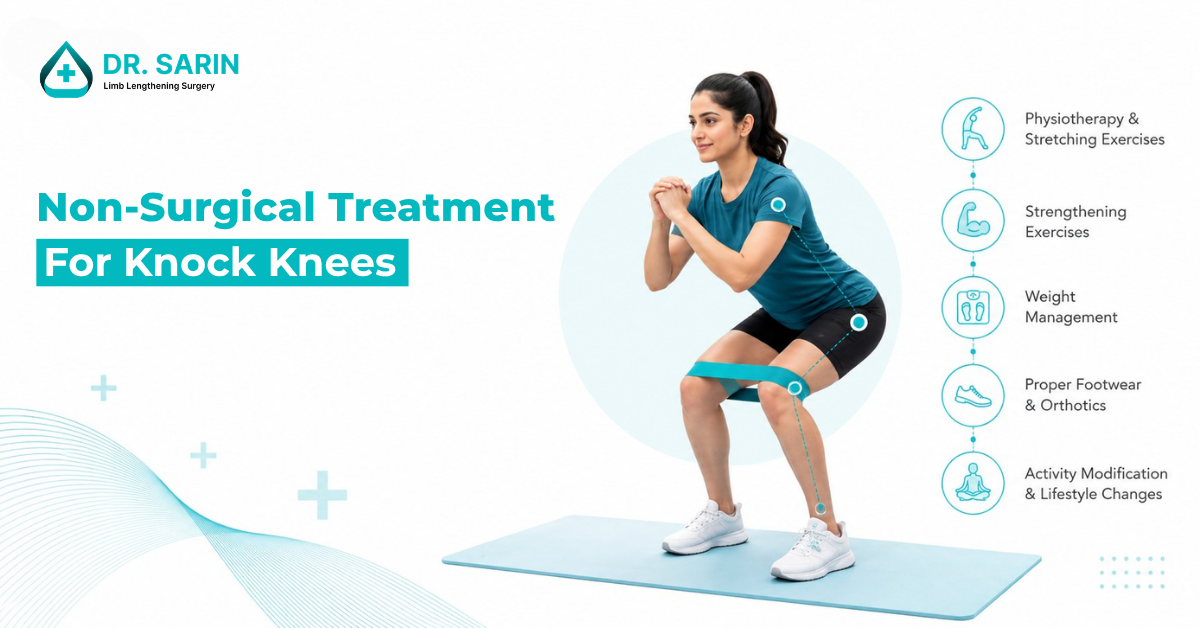
Exercises can play an important role in supporting overall strength, flexibility, and joint function. Strong muscles help support the lower limbs and contribute to better movement patterns.
However, the ability of exercise alone to change the actual alignment of the bones depends on the nature of the condition. Because genu valgum involves skeletal alignment, the degree of correction achievable through exercise varies from person to person.
Understanding the underlying cause of knock knees is essential before determining the role that exercise may play.
Can Lifestyle Changes Help?
Healthy lifestyle habits can contribute to overall orthopedic health. Maintaining an appropriate body weight, staying physically active, and supporting bone health through proper nutrition can all benefit the musculoskeletal system.
Lifestyle measures may help reduce stress on the joints and improve overall function. However, the extent to which these changes influence knock knee alignment depends on the individual circumstances.
While healthy habits are valuable, they should be viewed as part of a broader understanding of lower limb health rather than a universal solution for correcting genu valgum.
When Is Medical Correction Considered?
Medical correction may be considered when the alignment difference is significant, persistent, or affecting an individual’s quality of life.
The decision depends on several factors, including age, severity, bone structure, and overall orthopedic evaluation. A detailed assessment helps determine the nature of the deformity and whether correction may be beneficial.
Because every case is unique, there is no standard answer that applies to all individuals with knock knees.
Modern Approaches to Knock Knee Correction
Advances in orthopedic surgery and deformity correction have significantly improved the ability to address lower limb alignment problems.
Modern correction techniques focus on carefully evaluating the alignment of the bones and developing an individualized plan based on the patient’s specific needs. These approaches are designed to improve the mechanical alignment of the lower limbs and restore a more balanced leg structure.
The choice of approach varies depending on the person’s age, skeletal maturity, and the characteristics of the deformity.
Why Professional Evaluation Is Important?
Many people search online for ways to correct knock knees, but determining the most appropriate approach requires an accurate understanding of the condition itself.
A professional orthopedic assessment provides valuable information about the degree of genu valgum, the factors contributing to the alignment, and the options that may be available. It also helps establish realistic expectations regarding correction and outcomes.
Since no two individuals have exactly the same alignment pattern, personalized evaluation remains one of the most important steps in the correction process.
Expert Insight from Dr. Amar Sarin
Correcting knock knees requires a thorough understanding of lower limb alignment and the factors contributing to the deformity. According to Dr. Amar Sarin, an orthopedic surgeon with extensive experience in Knock knee correction, the most appropriate correction strategy depends on the individual’s age, skeletal development, and degree of genu valgum. A detailed evaluation helps identify the nature of the alignment issue and provides a clearer understanding of the options available for improving leg alignment.
Conclusion: How to Correct Knock Knees?
Learning how to correct knock knees begins with understanding the condition itself. Because genu valgum can vary in severity and may affect both children and adults differently, there is no one-size-fits-all solution.
Correction may involve different approaches depending on age, growth potential, bone structure, and overall orthopedic health. By understanding the factors involved and seeking expert guidance when necessary, individuals can gain a clearer understanding of their alignment and the possibilities for correction.