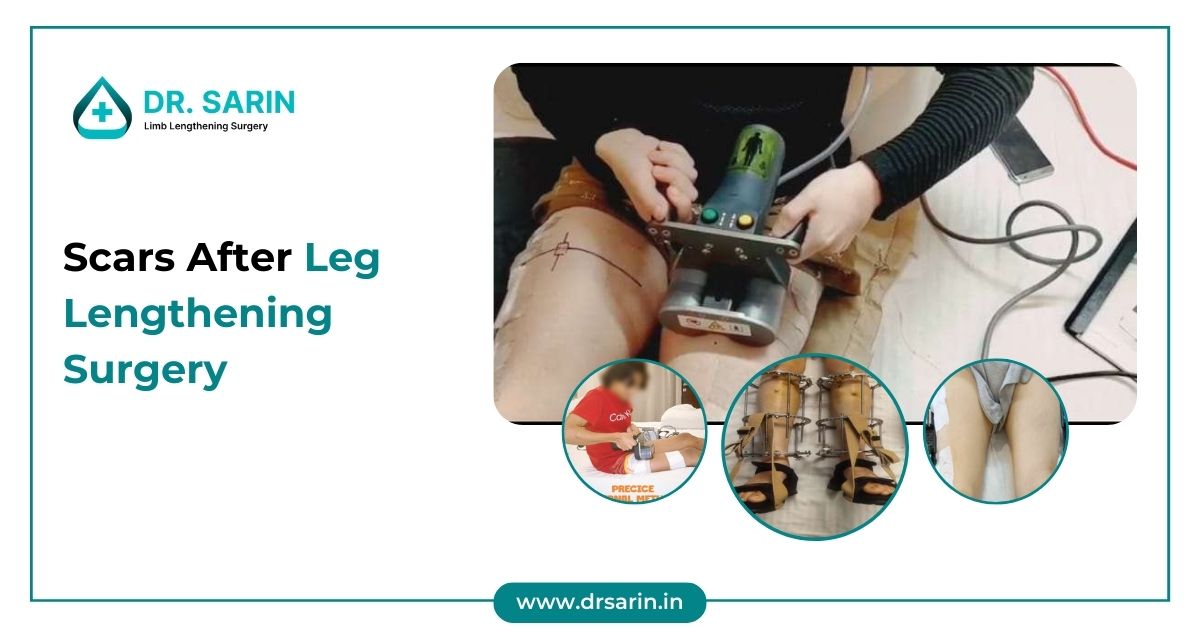
Despite major advancements in orthopaedic surgery, the Ilizarov technique continues to be regarded as the gold standard for treating complex limb conditions. Developed on the principle of controlled bone regeneration, this method has stood the test of time due to its unmatched versatility, reliability, and biological effectiveness.
Even today, when modern implants and minimally invasive techniques are available, experienced orthopaedic surgeons continue to rely on the Ilizarov technique for the most challenging cases.
Understanding the Ilizarov Technique
The Ilizarov technique is based on distraction osteogenesis, a biological process where bone and surrounding tissues regenerate when slowly and precisely stretched. Using a circular external fixator, the surgeon can control bone lengthening, correction of deformities, and healing in multiple planes.
What makes this technique unique is that it works with the body’s natural healing ability, rather than replacing it with artificial implants.
1. Unmatched Versatility in Complex Conditions
The Ilizarov technique is not limited to a single problem. It is used to treat a wide range of complex orthopaedic conditions, including:
- Limb length discrepancy
- Severe angular deformities
- Non-union and infected non-union of bones
- Bone loss due to trauma or infection
- Congenital limb deformities
- Post-traumatic malalignment
No other technique offers the same level of multidirectional correction and adaptability in complex cases.
2. Gold Standard for Infected and Non-Union Cases
One of the strongest reasons Ilizarov remains the gold standard is its effectiveness in infected non-union cases.
- Internal implants often fail in the presence of infection
- The Ilizarov frame avoids placing foreign material inside infected bone
- Allows continuous correction while treating infection
This makes it the most reliable solution where other surgical methods carry a high risk of failure.
3. Precise and Gradual Deformity Correction
Complex deformities often require correction in:
- Length
- Angle
- Rotation
- Alignment
The Ilizarov system allows gradual, millimeter-level adjustments, reducing stress on soft tissues and nerves. This level of precision cannot be safely achieved with one-time corrective surgeries.
Gradual correction also lowers the risk of complications such as nerve injury and poor bone healing.
4. Superior Bone Healing Through Natural Regeneration
Unlike internal fixation methods that depend on hardware stability, the Ilizarov technique stimulates new bone formation.
Key advantages:
- Strong regenerate bone formation
- Simultaneous adaptation of muscles, nerves, and blood vessels
- Reduced risk of bone graft failure
This biological advantage is particularly valuable in patients with poor bone quality or previous surgical failures.
5. Effective in Severe Bone Loss and Bone Transport
For patients with large bone defects caused by trauma, infection, or tumor removal, the Ilizarov technique enables bone transport.
- New bone is generated to replace missing segments
- Limb preservation is possible even in extreme cases
- Amputation can often be avoided
This ability alone makes the Ilizarov method irreplaceable in reconstructive orthopaedics.
6. Suitable for Both Children and Adults
The Ilizarov technique can be safely applied across a wide age range.
- Children benefit from its adaptability during growth
- Adults benefit from precise correction and strong bone regeneration
Because it respects biological healing principles, age is less of a limitation compared to other techniques.
7. Reduced Dependence on Internal Implants
In complex cases, internal implants may:
- Fail due to infection
- Require multiple revision surgeries
- Compromise bone biology
The Ilizarov technique minimizes reliance on internal hardware, making it safer for patients with previous implant failures or compromised soft tissues.
8. Proven Long-Term Outcomes
Decades of global clinical experience have demonstrated:
- High success rates
- Durable correction
- Lower recurrence of deformity
Surgeons worldwide continue to rely on the Ilizarov technique because it delivers predictable and lasting results, especially in difficult cases.
9. Surgeon Experience Matters
While the Ilizarov technique is powerful, its success depends heavily on the surgeon’s expertise.
Complex cases require:
- Precise planning
- Deep understanding of bone biology
- Continuous monitoring and adjustment
In experienced hands, the Ilizarov method remains unmatched in treating conditions that other techniques cannot safely address.
10. Why Modern Techniques Haven’t Replaced Ilizarov
Modern methods like internal lengthening nails and hybrid techniques have their place, especially in simpler cases. However:
- They are not suitable for infection
- They have limited correction capabilities
- They may not address severe deformities
This is why Ilizarov continues to be the first choice in complex and high-risk situations.
Conclusion
The Ilizarov technique has earned its reputation as the gold standard in complex orthopaedic cases due to its:
- Versatility
- Biological approach to healing
- Precision in correction
- Effectiveness in infection and non-union
- Ability to preserve limbs in severe cases
Even with modern surgical advancements, no other technique offers the same reliability in challenging conditions. When complexity increases, the Ilizarov method remains the most trusted solution in reconstructive orthopaedics.
For patients facing complicated limb problems, choosing an experienced surgeon who masters the Ilizarov technique can make a life-changing difference.
Also Read: