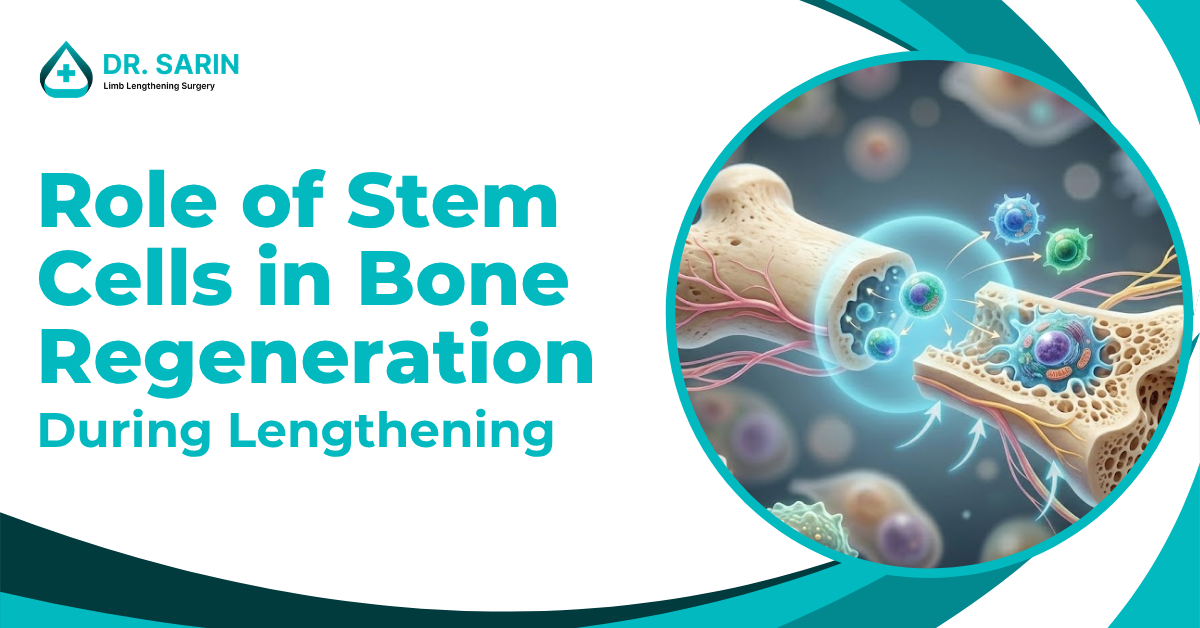
Limb lengthening is a medical procedure that helps people increase their height or correct unequal leg length. While the surgery itself is important, the real success of limb lengthening depends on how well the bone heals and grows. This healing process is called bone regeneration. One of the most important factors behind bone regeneration is stem cells.
Stem cells are naturally present in our body and they play a big role in forming new bone during limb lengthening. Understanding how stem cells work can help patients know what to expect during recovery and how to improve healing.
Understanding Bone Regeneration in Limb Lengthening
In limb lengthening surgery, the doctor carefully cuts the bone in a controlled way. After that, a special device is used to slowly separate the bone. As the bone moves apart, a gap is created between the two ends. The body then starts filling this gap with new bone.
This process is slow and gradual. Usually, the bone is lengthened around 1 mm per day. This slow movement allows the body enough time to create strong and healthy new bone.
During this process, stem cells play a major role. They move to the area where the bone was cut and begin forming new bone tissue. Without stem cells, proper bone regeneration would not be possible.
What Are Stem Cells?
Stem cells are special cells in the body that have the ability to change into different types of cells. These cells act like repair cells. When there is an injury or surgery, stem cells move to that area and start healing.
In limb lengthening, stem cells help in forming:
- New bone cells
- Blood vessels
- Soft tissues around the bone
These elements are important for proper healing and successful lengthening.
You can think of stem cells as the body’s natural repair system. When the bone is lengthened, stem cells automatically start working to rebuild the bone.
Stages of Bone Regeneration and Role of Stem Cells
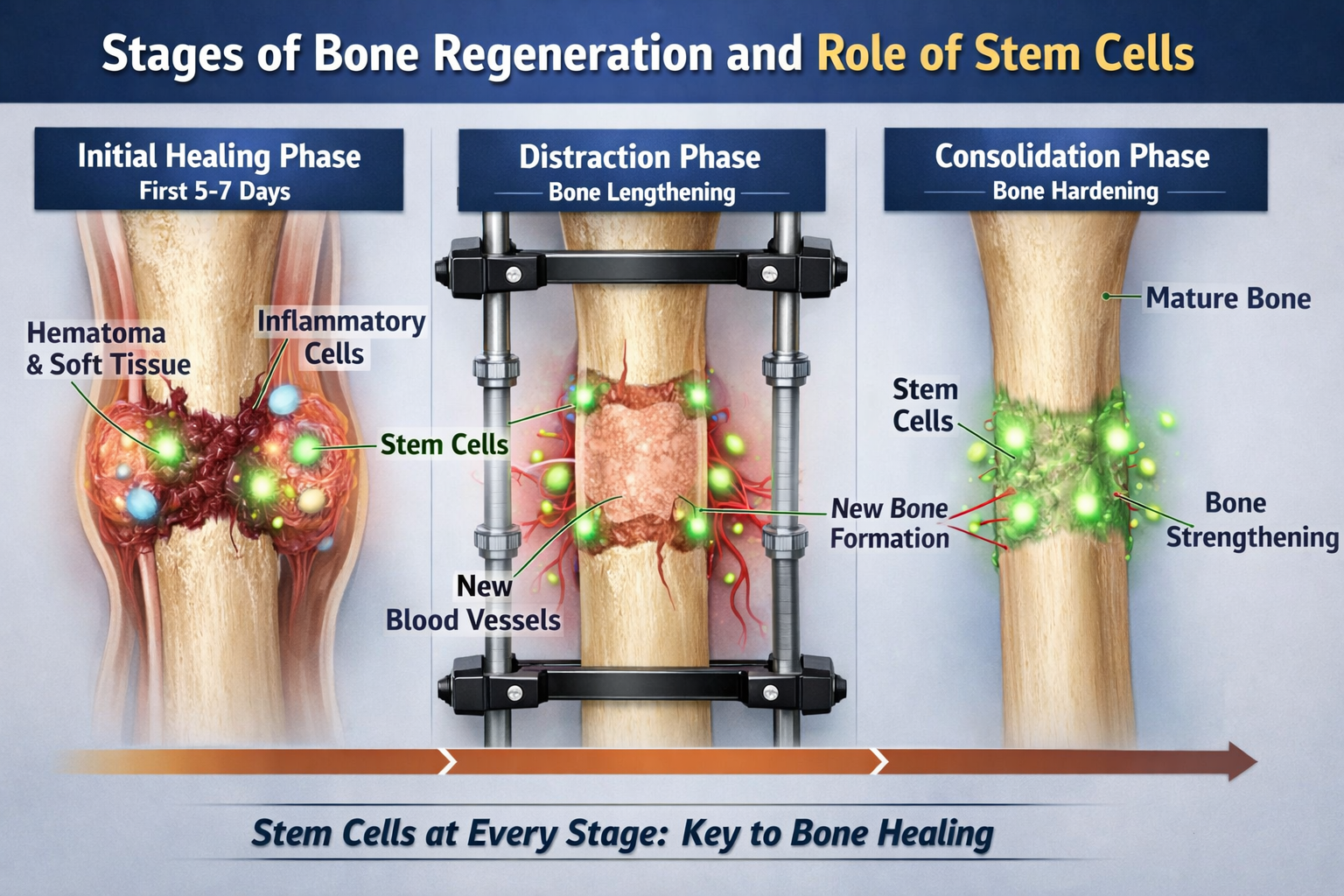
Bone regeneration during limb lengthening happens in different stages. Each stage depends on stem cells for healing.
Initial Healing Phase
After surgery, the body starts healing the bone cut area. Blood collects around the bone and forms a soft tissue. During this time, stem cells begin gathering at the site. These stem cells prepare the area for new bone formation.
This stage usually lasts around 5 to 7 days. It is very important because it sets the foundation for bone regeneration.
Distraction Phase
This is the stage when lengthening begins. The bone is slowly pulled apart using a device. As the gap increases, stem cells multiply and start forming new bone tissue.
During this stage, stem cells also help create new blood vessels. Good blood supply improves bone growth and speeds up healing.
This phase continues until the desired height or correction is achieved.
Consolidation Phase
Once lengthening is complete, the new bone needs to become strong. Stem cells continue working to harden the bone and improve its strength.
This stage can take a few months depending on the patient and lengthening amount. Proper care during this stage is important to avoid complications.
Why Stem Cells Are Important for Limb Lengthening Success?
Stem cells help improve bone regeneration and reduce complications. When stem cells work properly, the new bone forms faster and becomes stronger.
Good stem cell activity leads to smoother recovery. Patients may experience better healing and shorter treatment time. It also reduces the chances of delayed bone formation, which can sometimes occur in limb lengthening.
Stem cells also help in improving blood supply around the bone. Better blood flow means better healing and stronger bone formation.
In simple words, stem cells help the body recover naturally and safely.
Natural Stem Cells in the Body
The good thing is that the body already has stem cells. These natural stem cells start working automatically after limb lengthening surgery. Most patients do not need any special treatment because natural stem cells are enough for bone regeneration.
However, some factors affect how well stem cells work. Age, lifestyle, and nutrition all play a role. Younger patients usually heal faster because their stem cells are more active. Adults may take slightly longer, but good care can improve healing.
Stem Cell Therapy in Some Cases
In some situations, limb lenthening doctors may use stem cell therapy to improve bone healing. This is usually done when bone regeneration is slow or when the patient has a higher risk of delayed healing.
In stem cell therapy, stem cells are taken from the patient’s body, usually from bone marrow. These cells are then injected near the bone lengthening area. This helps boost bone formation and improve healing.
Not every patient needs stem cell therapy. Doctors recommend it only when necessary.
Factors That Help Stem Cells Work Better
Patients can improve bone regeneration by supporting stem cell activity. A healthy lifestyle plays a big role in this process.
Eating a balanced diet is very important. The body needs protein, calcium, and vitamins to form new bone. Foods like milk, eggs, green vegetables, and nuts can support healing.
Regular physiotherapy also improves blood circulation. Better circulation helps stem cells reach the bone faster. This improves bone formation.
Sleep is another important factor. During sleep, the body repairs itself and stem cells work actively. Getting enough rest can improve recovery.
Smoking and alcohol should be avoided during limb lengthening. These habits slow down healing and reduce stem cell activity. Doctors strongly advise patients to avoid them.
Signs of Good Bone Regeneration
Doctors monitor bone healing using regular X-rays. When stem cells are working properly, the new bone becomes visible in the gap. Over time, this bone becomes stronger and more solid.
Patients may also feel improved stability and reduced discomfort as bone strength increases. Good bone regeneration usually leads to smoother recovery.
What Happens If Bone Healing Is Slow
Sometimes bone regeneration may be slower than expected. This can happen due to age, poor nutrition, or large lengthening amounts. In such cases, doctors may slow down the lengthening process to allow more time for healing.
Additional supplements or treatments may also be recommended. In some cases, stem cell therapy may be considered to improve bone formation.
Most patients recover well with proper care and monitoring.
The Future of Stem Cells in Limb Lengthening
Stem cell technology is improving rapidly. Doctors are exploring new ways to make limb lengthening safer and faster. In the future, stem cell-based treatments may help reduce recovery time and improve results even more.
Research is ongoing, and many advanced techniques are already being used in specialized centers.
Final Thoughts
Stem cells play a very important role in bone regeneration during limb lengthening. They help create new bone, improve healing, and support recovery. Without stem cells, limb lengthening would not be possible.
Patients can support their healing by following medical advice, maintaining a healthy lifestyle, and staying consistent with physiotherapy. With proper care, stem cells help ensure successful limb lengthening and strong bone formation.
Understanding this process helps patients feel more confident and prepared for their limb lengthening journey.
Also Read:
- Scars After Leg Lengthening Surgery: Types, Treatments and Differences
- How Safe Is Limb Lengthening Surgery? Risks and Precautions
- What’s The Average Height Per Country?
- Limb Lengthening Surgery Recovery Time: When Can You Return to Work & Sports?
- Average Height and Weight chart for Indian Man and Woman