When most people think of knock knees, they often associate the condition with childhood. However, knock knees can also affect adults. In some individuals, the condition has been present since childhood and continues into adulthood, while others may notice changes in their leg alignment later in life.
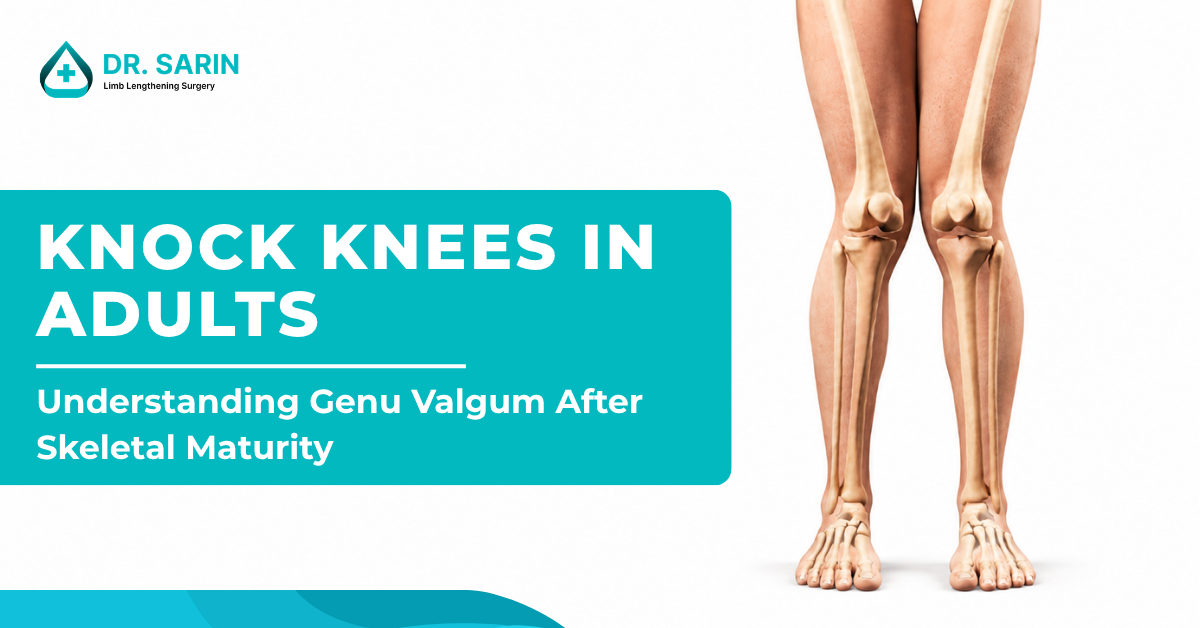
Knock knees, medically known as genu valgum, occurs when the knees angle inward while the ankles remain apart when standing. Although the condition is commonly discussed in relation to growing children, it is not limited to younger age groups. Adults can also experience genu valgum, and the condition may affect the appearance and alignment of the lower limbs.
Understanding knock knees in adults can help individuals recognize the condition and better understand how leg alignment may change over time.
Can Adults Have Knock Knees?
Yes, adults can have knock knees. In fact, many adults live with genu valgum without realizing that their leg alignment differs from what is typically considered normal.
Some individuals have had knock knees since childhood. As they grow older, the alignment remains relatively unchanged and becomes part of their natural skeletal structure. Others may become more aware of the condition as they pay closer attention to their posture, walking pattern, or leg appearance.
The severity of knock knees in adults can vary widely. Some people have a mild inward angulation that is barely noticeable, while others have a more pronounced alignment difference.
Why Do Some Adults Still Have Knock Knees?
One reason adults may have knock knees is that the condition persisted beyond childhood growth and development. If the alignment does not naturally improve during the growing years, it may remain present after skeletal maturity.
In other cases, changes in the bones or joints over time can influence leg alignment. The lower limbs are complex structures that support body weight and movement throughout life. Various factors can affect how these structures function and align.
Because every individual has a unique skeletal framework, the reasons behind adult knock knees can differ from person to person.
Can Knock Knees Develop in Adulthood?
While some adults have had genu valgum since childhood, others may notice the condition becoming more apparent later in life.
Changes affecting the bones, joints, or overall lower limb mechanics can sometimes contribute to the development of inward knee alignment after skeletal maturity. In these situations, the appearance of knock knees may gradually increase over time rather than being present from an early age.
For this reason, adults who notice new changes in their leg alignment often seek professional guidance to better understand what may be contributing to the condition.
What Do Knock Knees Look Like in Adults?
The appearance of knock knees in adults is similar to that seen in younger individuals. When standing with the knees touching or close together, a gap remains between the ankles.
From the front, the legs appear to angle inward at the knees. Depending on the degree of genu valgum, this alignment change may be subtle or more noticeable.
Many adults first recognize knock knees after observing their posture in photographs, noticing differences in the way their legs appear when standing, or comparing their alignment with others.
How Common Are Knock Knees in Adults?
Knock knees are less commonly discussed in adults than in children, but they are not rare. Many adults have mild variations in leg alignment that fall within a broad spectrum of normal anatomical differences.
The visibility of the condition often depends on its severity. Mild genu valgum may attract little attention, whereas more pronounced alignment differences may be easier to notice.
Because leg alignment exists on a continuum, there is no single appearance that defines every case of adult knock knees.
Do Knock Knees Become More Noticeable with Age?
Some adults feel that their knock knees have become more noticeable over time. This perception may be related to changes in posture, body weight, muscle strength, or joint health.
In other cases, the alignment itself may not have changed significantly, but the individual becomes more aware of it as they age. Greater attention to physical appearance, movement, or orthopedic health can make previously overlooked alignment differences more apparent.
Understanding the condition can help individuals distinguish between long-standing alignment patterns and changes that may warrant further evaluation.
Can Knock Knees Affect Daily Life?
The impact of knock knees varies from person to person. Some adults live with genu valgum without experiencing any significant concerns, while others become more aware of the condition due to its appearance or the way it influences movement.
The degree of alignment difference often plays a role in how noticeable the condition becomes during everyday activities. Because each case is unique, the experience of living with knock knees can differ considerably among individuals.
Understanding the condition is an important first step toward determining whether further assessment may be beneficial.
Why Understanding Adult Knock Knees Is Important?
Many adults assume that knock knees are only a childhood condition. As a result, they may not realize that genu valgum can persist into adulthood or develop later in life.
Learning about adult knock knees helps individuals better understand lower limb alignment and recognize variations in skeletal structure. It also encourages greater awareness of how the hips, knees, and ankles work together to support posture and movement.
A better understanding of genu valgum can provide valuable insight into overall orthopedic health and leg alignment.
Expert Perspective from Dr. Amar Sarin
Knock knees in adults can present differently from one person to another. According to Dr. Amar Sarin, an orthopedic surgeon with extensive experience in Knock Knee Correction, adult genu valgum may range from mild alignment variations to more significant deformities. Understanding the nature of the condition and the factors contributing to the alignment difference is an important step in determining the most appropriate course of action. A detailed orthopedic evaluation can provide valuable insight into lower limb alignment and individual patient needs.
Conclusion About Knock Knees in Adults
Knock knees in adults is a condition in which the knees angle inward while the ankles remain apart when standing. Although commonly associated with childhood, genu valgum can persist into adulthood or become more noticeable later in life.
The condition varies widely in appearance and severity, making every case unique. By understanding how knock knees can affect adults, individuals can become more informed about their lower limb alignment and overall orthopedic health. Greater awareness of genu valgum can help adults recognize the condition and seek professional guidance when necessary.